
Types of intelligence

Nemanja Kurlagić
Nov. 11, 2021, 10:31 a.m.
When you hear the word intelligence, the concept of IQ testing may come to mind. Intelligence is often defined as our intellectual potential, something we are born with, something that can be measured, and is difficult to change.
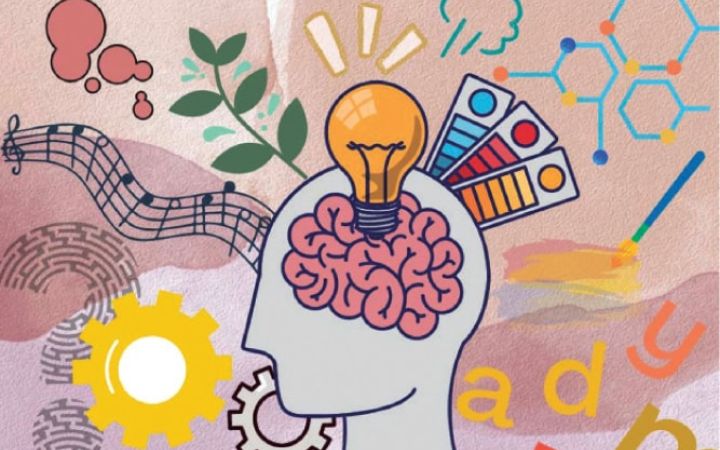
In recent years, however, different views on intelligence have emerged. One such concept is the "Theory of Multiple Intelligences" proposed by Harvard psychologist Howard Gardner.
This theory suggests that the traditional psychometric view of intelligence is too limited. Gardner first stated his theory in the book Frames of Mind: The Theory of Multiple Intelligences (1983), where he proposed that all people have different types of intelligence. He claimed there are eight types of intelligence and later added another potential type called "existential intelligence."
To encompass the entire spectrum of abilities and talents people possess, Gardner suggests that people don't just have an "intellectual capacity" but a diverse array of intelligences such as: musical, social, spatial-visual, verbal, and so on. A person may have one that is more pronounced than the others, or a mixture of different types, for example: musical, verbal, and interpersonal (social).
Gardner's theory has been the target of criticism from many psychologists and educators. They claim that Gardner's definition of "intelligence" is too broad, and that his eight different types represent only talents, traits, personalities, and abilities, and that his theory lacks empirical research.
Despite this, the Theory of Multiple Intelligences enjoys popularity among educators. Many psychology and philosophy teachers use it and try to integrate it into their teaching.
Keep reading to learn about the main characteristics of each type of intelligence and which one you belong to.
1. Visual-Spatial Intelligence
This intelligence is characterized by learning and thinking in images. People with a strong visual-spatial intelligence remember faces better than names, like to express their ideas through drawing or sketching, enjoy assembling and disassembling things, and notice styles of clothing, cars, or other items from life. They often draw, notice shapes, and enjoy watching movies. Some people express this intelligence through activities like fine arts, photography, film, or design, while others express it through architecture, modeling, or construction.
Characteristics
- Enjoy reading and writing
- Good at interpreting pictures, graphs, and charts
- Enjoy drawing, painting, and visual arts
- Easily recognize patterns
Potential Career Choices
- Architect
- Artist
- Model maker
2. Linguistic (Verbal) Intelligence
Linguistic intelligence involves a strong interest in words and how words are used in reading, writing, and speaking. It also includes an enjoyment of word games, foreign languages, storytelling, creative writing, or reading. People with more developed linguistic intelligence enjoy reading books, comics, and newspapers; writing poems and stories; and are good communicators, etc.
Characteristics
- Good at remembering spoken and written information
- Enjoy reading and writing
- Good at debating and giving persuasive speeches
- Explain things clearly
Potential Career Choices
- Writer
- Journalist
- Lawyer
- Teacher
3. Logical-Mathematical Intelligence

This intelligence involves an easy understanding and application of numbers and mathematical concepts, finding patterns, and easily noticing relationships, causes, and effects in science. This type of intelligence is expressed in: solving problems and puzzles, solving math problems mentally, using computers and learning computer programs and languages, presenting facts using maps, and finding solutions in detective stories. What connects all these different activities, and what is the key element of this intelligence, is the logic used as a tool for problem-solving.
Characteristics
- Excellent problem-solving skills
- Enjoys thinking about abstract ideas
- Likes conducting scientific experiments
- Good at solving complex calculations
Potential Career Choices
- Scientist
- Mathematician
- Computer programmer
- Accountant
- Engineer
4. Bodily-Kinesthetic Intelligence

This intelligence is more common in people who express themselves and their abilities using their bodies, which means they think and learn with their bodies. These are people who: love movement and physical activity, learn physical skills easily and quickly, enjoy participating in sketches or plays, are successful athletes, are skilled in applied arts, sculpture, knitting and sewing, building models, have good coordination, dance elegantly, perform magic tricks, etc.
Characteristics
- Good at dancing and sports
- Enjoy making things by hand
- Good coordination
- Remember things better through action than through visual or auditory observation
Potential Career Choices
- Sculptor
- Actor
- Dancer
- Builder
5. Musical Intelligence

People with developed musical intelligence, in addition to loving and enjoying music, better understand rhythm, melody, and sound motifs; easily remember melodies; and feel the difference between various instruments playing at the same time. They also enjoy activities such as singing, playing an instrument, listening to music, and gladly going to concerts.
Characteristics
- Enjoy singing and playing musical instruments
- Easily recognize musical instruments and tones
- Good at remembering songs and melodies
- Have a rich understanding of musical structure, rhythm, and notes
Potential Career Choices
- Musician
- Composer
- Singer
- Conductor
- Music teacher
6. Interpersonal Intelligence

Interpersonal intelligence expresses a person's ability to: easily meet people and make friends, enjoy observing people and analyzing their body language, enjoy group activities and lively conversations, organize activities well for themselves and others, know how to spark interest in a common task, care about what is right and wrong, pay attention to how others feel, and care about other people and finding ways to help them, because this intelligence enables them to understand others.
Characteristics
- Good at verbal communication
- Skilled in nonverbal communication
- Look at situations from different perspectives
- Build positive relationships with others
- Good at resolving conflicts with other people
Potential Career Choices
- Psychologist
- Counselor
- Marketing and sales
- Politician
7. Intrapersonal Intelligence
This type of intelligence involves the tendency and ability of people to be more inwardly focused because they know themselves well and have a good idea of who they are and what they can do. People with more developed intrapersonal intelligence are more aware of their own feelings and can understand themselves better than others can. They are able to set personal goals, reflect on their experiences and learn from them, and spend time thinking deeply about what is important to them and their future. They prefer activities they can do alone.
Characteristics
- Analyze their strengths and weaknesses well
- Enjoy analyzing theories and ideas
- Excellent self-awareness
- Clearly understand the basis and motives of their feelings
Potential Career Choices
- Philosopher
- Writer
- Theorist
- Scientist
8. Naturalistic Intelligence
This intelligence is present in people who love nature and the environment they live in, notice nature wherever they are, have a good memory for details related to places they've been, love animals and plants and can easily recognize them, have the ability to understand and navigate different situations or places, care about their natural environment, enjoy hiking or camping in nature, show an interest in lakes, rivers, oceans, astronomy, and everything related to nature, and easily notice certain changes in it.
Characteristics
- Interested in subjects such as botany, biology, and zoology
- Good at categorizing and easily classifying information
- Enjoy hiking, camping, gardening, and exploring nature
Potential Career Choices
- Biologist
- Gardener
- Farmer
- Adventurer
9. Existential (Spiritual) Intelligence
Although this type of intelligence is not clearly defined, as every person deals with the "ultimate questions" of human existence to some extent, a few characteristics can be highlighted: it includes a person's sensitivity and capacity to deal with deep questions about human existence such as the meaning of life, who we are, why we die, what the purpose of life is, and how we came to be.
Text by Nemanja Kurlagić – psychotherapist using the O.L.I. method
Sign up for the newsletter
Comments for this article
Write your comment
Comment form